Use cases › Ecommerce
For online stores
Every article knows
what you sell
RankSpiral reads your catalogue, writes the articles your buyers search for, and puts the right product inside the sentence where it belongs. Then it counts who clicked through.
- Shopify or CSV, synced
- Links never point at dead products
- Every click counted per article
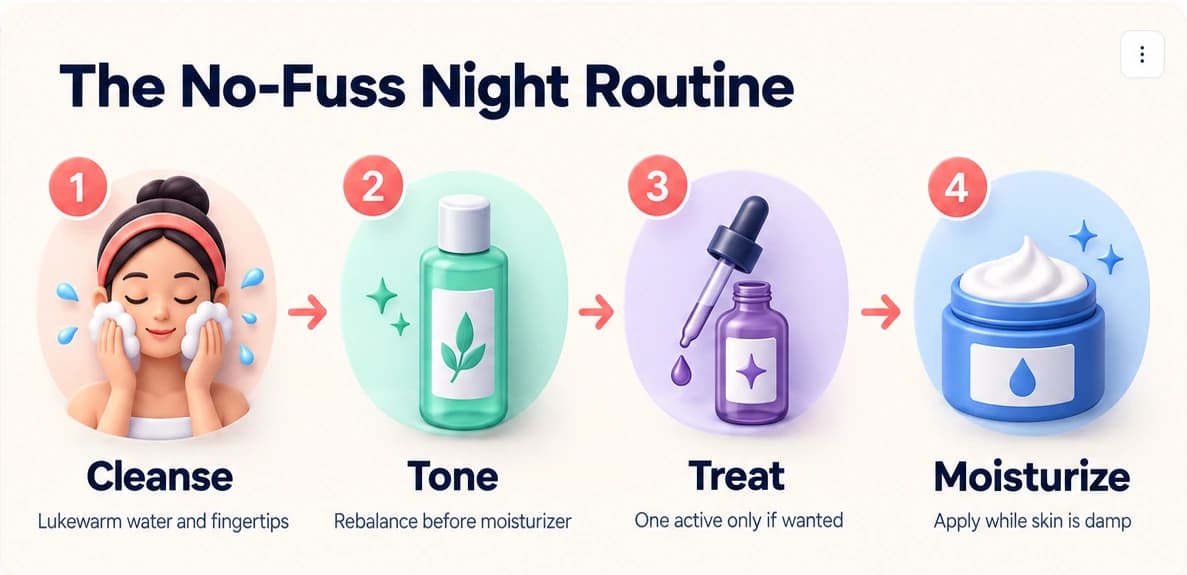
For the nights when a full cleanse feels like scaling a mountain, Kynde’s Micellar Cleansing Water ($15.95, 200ml) does the job in one step. Fragrance-conscious, no rinsing required, and it lifts makeup and city grime without the tug-and-scrub routine.
It lives on my bedside table, which is either a great tip or a confession.
Follow with Kynde’s Hydrating Toner ($15.95) if you want to rebalance the skin before moisturizer without introducing another active into the mix. It’s a comfort step more than a corrective one, and honestly, comfort is the point.
Without RankSpiral
Content is a cost centre
until it links to stock
Most stores end up with a blog full of how-to posts that rank quietly and sell nothing, because the tool that wrote them never knew the catalogue existed.
Articles that mention nothing you sell
A guide ranks, the reader leaves, and no product was ever in front of them.
Links pointing at dead products
Discontinued or out-of-stock URLs sit in old posts for months.
No idea which post sells
Rankings go up, revenue does not, and nothing tells you which page is at fault.
How-to only, never buyer intent
The cluster that decides purchases is the one nobody wrote.
Catalogue
synced 12 minutes ago
Ooni Karu 12
Pizza ovens · £299
Ooni Koda 16
Pizza ovens · £449
Karu 12 Classic
Linked from 3 articles
Pizza peel, 14in
Accessories · £39 (was £49)
412 products, 18 collections
Open catalogue →Your catalogue
The store syncs itself
Connect Shopify or upload a CSV once. Products, collections and prices stay current, so the article never recommends something you stopped selling.
- Discontinued products drop out of new articles automatically on the next sync, and you can exclude anything else with one click.
- Dead links in older posts are flagged with a one-click swap to the closest live product.
- Collections become link targets too, for the clusters where a category fits better than one item.
What gets written
Buyer intent first, not last
The authority map separates how-to searches from the ones made with a card in hand. For a store, the commercial clusters get written first, because those are the ones that pay for the rest.
- Comparison and best-of clusters are prioritised over definitions and how-tos.
- Every cluster carries a value, so the queue is ordered by estimated revenue rather than volume.
- Question keywords still get covered, so you are the source assistants quote.
Write these next · ordered by value
Best pizza oven for small gardens
2.6k a month · KD 34
Ooni Karu vs Koda
1.9k a month · KD 28
Pizza oven accessories worth it
1.2k a month · KD 22
How hot does a pizza stone get
3.1k a month · KD 19
47 clusters still unwritten
Open the map →What earned this month · last 28 days
Ooni Karu 12
38 clicksBest pizza oven for small gardens
Ooni Koda 16
24 clicksOoni Karu vs Koda
Pizza peel
19 clicksAccessories worth it
Dough starter kit
11 clicksRetrolinked into a 2023 post
148 tracked links across 46 articles
Open analytics →What you get back
You find out which post sold something
Every product link is tracked back to the article that carried it. No modelling, no attribution guesswork, just the click and the page it came from.
- Clicks by product, by article and by link kind, in one table.
- Old posts get money links retrofitted using phrases already in your prose.
- Ad-blocked clicks are not counted, so every figure is a floor rather than a total.
One article, end to end
From a keyword to a basket, in five steps
The same pipeline every article runs. What makes it an ecommerce pipeline is step three.
Cluster
Buyer-intent keywords grouped on live Google results.
Day 1Brief
Outline built from what currently ranks, plus real questions.
Day 1Match
Your in-stock products matched to the sentences that need them.
AutomaticPublish
Straight into Shopify, on your calendar, after your approval.
Day 2Count
Clicks tracked per product, per article, from the first visitor.
OngoingStores running on RankSpiral
What changes in the first year
Averages across the ecommerce accounts on the platform. Your catalogue size and margins will move these.
312
clicks to product pages a month, per store
4.8%
of readers reach something you sell
61%
of articles carry at least one product link
9 days
median time from publish to first product click
Measured clicks only. Ad-blocked and privacy-browser clicks are not counted, so treat each figure as a floor.
The part nobody else does is linking our actual products inside the articles. I can see which post sent someone to checkout, and it is never the one I would have guessed.

Marcus Oyelaran
Ecommerce lead, The Toolshed
What it plugs into
Built for the stack
you already run
Connect what you have. Nothing needs migrating, and your storefront stays exactly where it is.
Shopify
Products, collections and prices, synced daily.
Product CSV
For any other platform. Re-import any time — it replaces the previous file.
WooCommerce
Publishes through your WordPress connection; catalogue via product CSV.
WordPress
Publish and schedule straight into your blog.
Webflow
Collection items created and updated on publish.
Framer
Publish into a Framer CMS collection automatically.
Search Console
Real clicks and impressions beside your rankings.
Webhook
Anything else. Payload on publish, your endpoint.
Questions from store owners
New articles only link what is in your synced catalogue, so anything you remove from your store — or exclude by hand, one click per product — never gets linked. When a product is discontinued, existing links to it are flagged with a one-click swap to the closest live product. And if the sentence names the dead product, we suggest removing the link instead: an article about the Karu 12 must never point at a Koda.
See what your catalogue
could be earning
Connect a store and we will map the niche, price every cluster, and write your first two articles with your products inside.
3-day trial · two full articles on us · no card